Choosing between natural stone and artificial stone presents a classic dilemma. Natural stone boasts timeless, unique character. Artificial stone delivers consistent, practical advantages. Which material weighs less? Can you use it structurally? How do costs and maintenance compare? We clarify common myths about radiation and the cost-quality relationship. This factual side-by-side comparison helps you select the ideal material for countertops, flooring, or exteriors.
Natural stone offers unique beauty and strength. Artificial stone provides consistent looks and lower costs.
Artificial stone weighs less and installs faster. Natural stone can support structural loads.
Choose natural stone for high-end, structural projects. Choose artificial stone for budget-friendly, uniform designs.
Natural stone comes directly from quarries. Workers cut large blocks from the earth and shape them into slabs, tiles, or structural pieces. This material is heavy, one-of-a-kind, and capable of bearing loads in buildings. Each piece carries unique patterns formed over millions of years. You will notice transparent or translucent particles that give natural stone a brighter, deeper appearance than manufactured alternatives.
Granite stands as the most common choice in construction. Its durability, strength, and weather resistance make it ideal for countertops, flooring, and building facades. Marble and granite rank as preferred options for home flooring because they offer a polished, scratch-resistant surface. Sandstone and limestone generally cost less, which suits budget-conscious projects. These stones vary in color, veining, and texture from piece to piece. That variation defines their charm.
Manufacturers produce artificial stone by combining crushed minerals with binding agents. Engineered quartz, for example, mixes natural quartz crystals with resin binders and pigments. The result is a uniform material that replicates colors consistently across every slab. Unlike natural stone, artificial stone cannot support structural loads. However, it weighs less and installs faster.
Brands like Kangyi produce high-quality Engineered Stone Slabs that deliver consistent color and reliable performance. Their High Strength Engineered Quartz products resist water and frost when treated with impregnation. This artificial stone material suits projects where uniformity matters more than uniqueness. You get predictable results without the natural variation found in quarried stone.
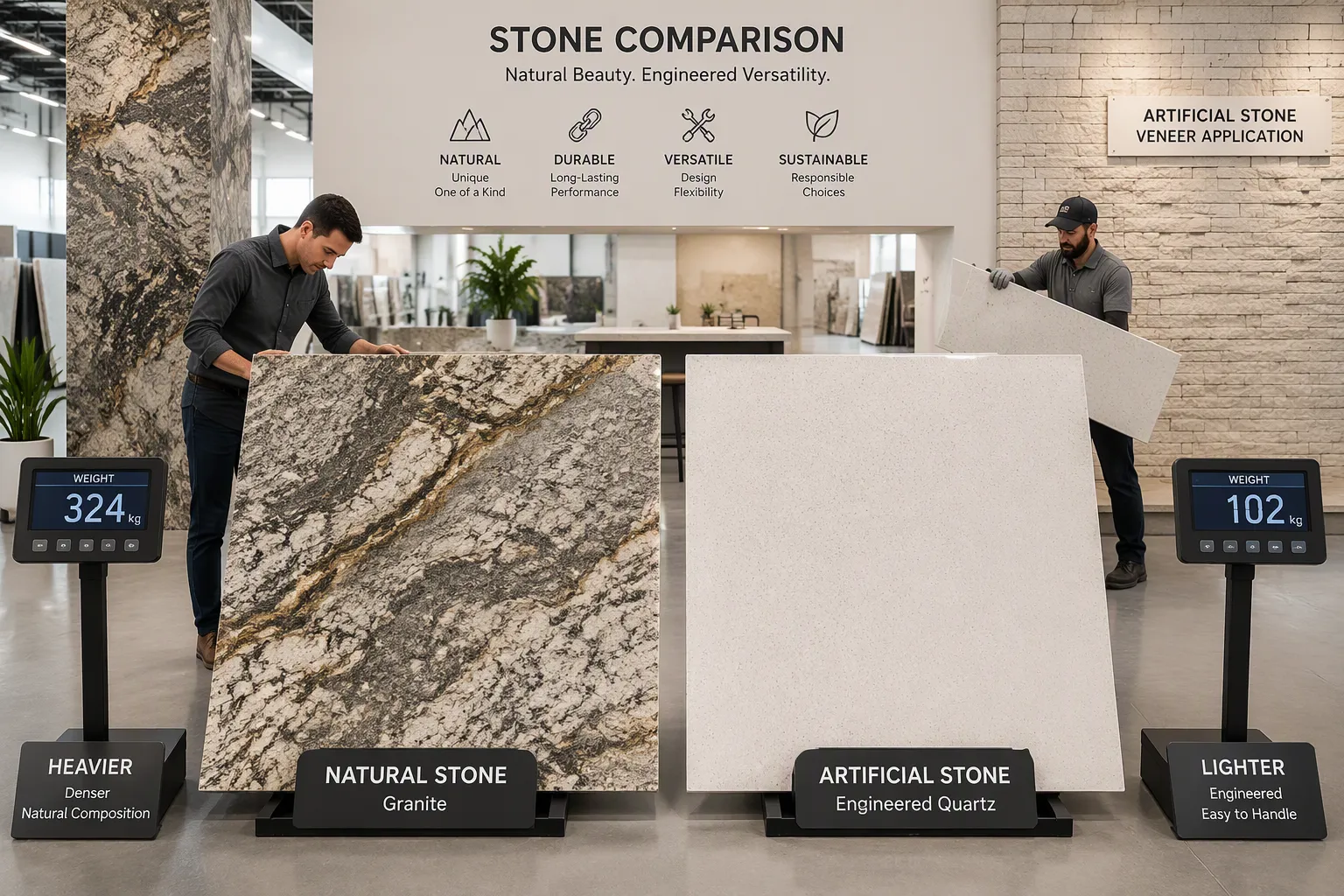
The driving factors that distinguish between natural and artificial stone include weight, structural capability, and appearance. Understanding the differences between natural stones and artificial stones helps you make an informed choice. These differences between natural stones and artificial stones affect installation costs, design options, and long-term durability.
Weight creates the most noticeable difference between natural stone and the manufactured alternative. A 2cm thick granite slab weighs 12 to 14 pounds per square foot. An Engineered Stone Slabs product at the same thickness weighs 10 to 13 pounds. The difference adds up across an entire kitchen or bathroom installation.
Lighter panels install faster. You lift and position them without heavy equipment or extra crew members. This reduces labor costs and speeds up project timelines. The heavier material demands more workers, stronger subfloors, and additional reinforcement. The weight limits where you can use it effectively. Upper-floor installations often require structural upgrades to support the load.
Natural stone can support structural loads. You use granite or limestone for load-bearing columns, foundations, and walls. Artificial stone cannot perform this function. It serves only as a surface layer or decorative veneer mounted onto a backing.
Visual differences between the two materials define many design decisions. Natural stone displays unique patterns formed over millions of years underground. Each slab contains distinct veining, color variations, and mineral inclusions. Translucent particles catch light and create visible depth. No two pieces ever look identical.
Manufactured stone offers uniform results. Manufacturers control pigments and binders to produce consistent slabs. Every piece matches the next in color and pattern. You get predictable results across large installations. However, you sacrifice the originality that gives natural stone its character.
Thermal behavior differs when comparing natural stone and engineered quartz. Natural stone has a coefficient of 4 to 8 × 10⁻⁶ per °F. Engineered quartz ranges from 6 to 10 × 10⁻⁶ per °F. The thermal expansion coefficients for natural stone and engineered quartz highlight this difference. The manufactured material expands and contracts more with temperature changes. This matters for countertops near heat sources or outdoor installations in direct sunlight.
The artificial vs. natural debate extends to environmental impact. Natural stone produces less embodied carbon across all applications.
|
Application |
Natural Stone GWP (kg CO₂ eq/m²) |
Artificial Stone GWP (kg CO₂ eq/m²) |
|---|---|---|
|
Cladding |
13.81–21.4 |
62.3 |
|
Flooring |
22.0 |
73.2–82.2 |
|
Countertop |
46.8 |
102.6 |
For countertops, the difference reaches 55.8 kg CO₂ eq/m². This gives it a clear advantage for environmentally conscious projects.
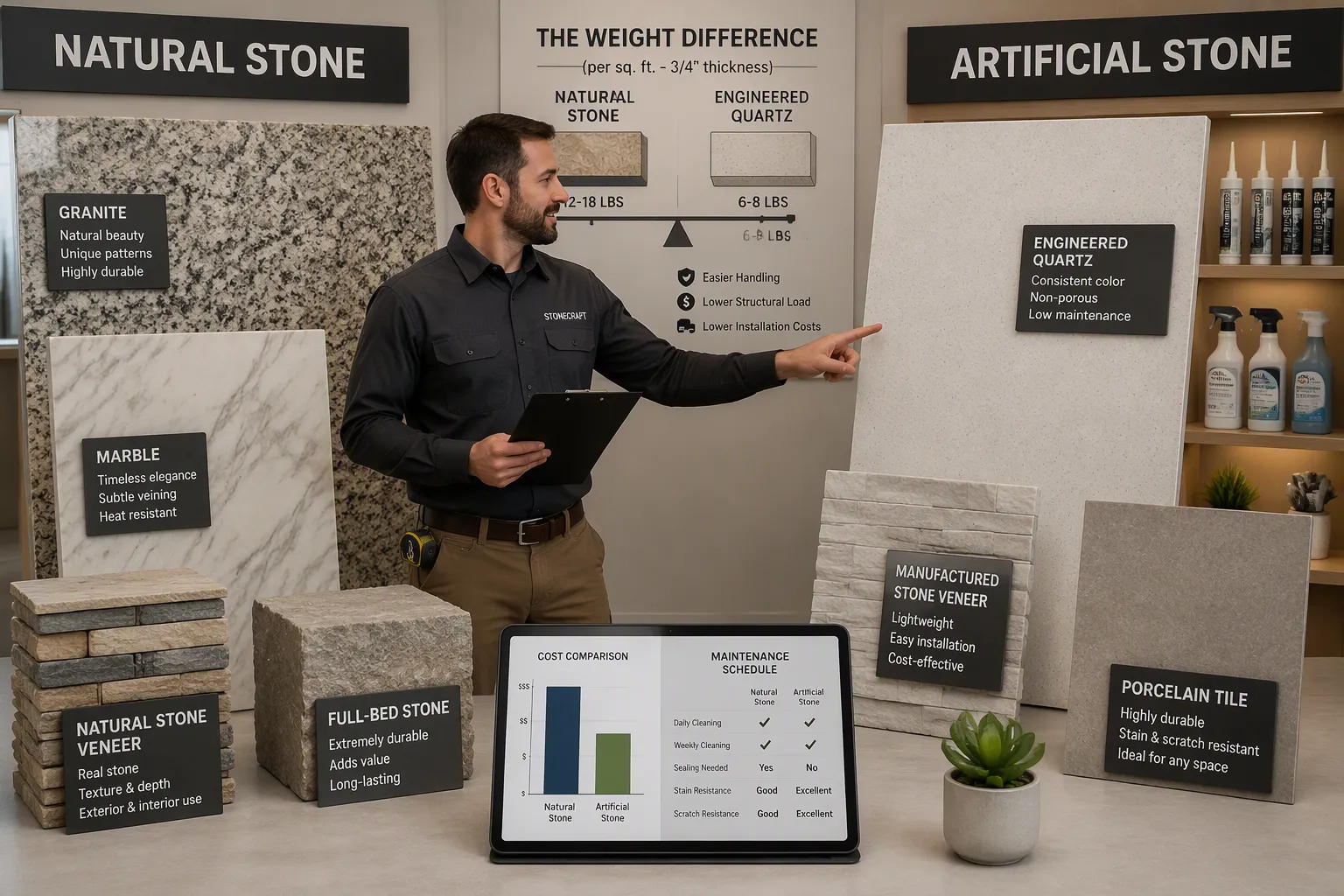
Natural stone wins on beauty and strength. Its translucent particles catch light and create depth that no factory can copy. Granite and marble resist scratches and heat. You can also trust natural stone to carry structural loads, which makes it a rare two-in-one material for walls and facades.
Artificial stone counters with lower prices, lighter slabs, and faster installation. Advanced products such as High Strength Engineered Quartz add real durability to that list. Manufacturers treat these slabs with impregnation, so they resist water and frost. That protection matters outdoors and in humid rooms. Brands like Kangyi sell Engineered Stone Slabs that hold their color across every panel.
Cost tells a clear story. Installed countertop prices per square foot look like this:
|
Stone Type |
Cost Range (per sq ft installed) |
|---|---|
|
Engineered Stone (e.g., quartz) |
$70 - $150 |
|
Natural Stone - Granite |
$60 - $200+ |
|
Natural Stone - Marble |
$75 - $200+ |
Maintenance separates them further. Artificial stone flooring, such as porcelain tile, costs you $0–50 a year in upkeep. Natural stone flooring runs $50–200+ each year for sealing and cleaning products. The permeability of natural stone explains that gap. Liquids seep into its pores, so you must seal it regularly.
The disadvantages of natural stone start with weight and price. A natural stone veneer weighs 13–25 pounds per square foot. Full-bed natural stone reaches 35–50+ pounds per square foot. Manufactured veneer weighs only 8–12 pounds per square foot. Cultured stone sits at 10–15 pounds per square foot against 12–20 for natural stone. Those loads demand extra support and stronger crews.
The disadvantages of the artificial stone center on sameness and hidden weakness. Every slab looks alike, so you lose the originality that makes stone feel special. A sharp bump can also expose weak spots in the material. Engineered quartz expands more with heat than natural stone does, which limits outdoor use in direct sun.
Weigh these advantages and disadvantages before you buy. The differences between natural stones and artificial stones come down to your priorities. Do you want one-of-a-kind character, or do you want predictable results at a lower price? Both answers are valid. Your project decides which one fits.
Many buyers worry about radiation from stone countertops. This fear is largely unfounded. Both natural stone and artificial stone from reputable suppliers are safe for home use. The key is sourcing from trusted manufacturers who test their products. Cheap, untested stone from unknown sources may carry higher risk. Always ask your supplier for safety documentation.
A common belief holds that higher cost always means better quality. This is not true. Natural stone may carry a higher price tag, but it also demands more maintenance over time. You must seal it regularly to prevent stains. Artificial stone, by contrast, offers excellent performance at a lower cost. Brands like Kangyi produce Engineered Stone Slabs and High Strength Engineered Quartz that deliver consistent quality without the premium price. These products resist water and frost when treated properly. You get reliable performance for less money.
Another myth claims natural stone is too expensive for most budgets. In reality, prices vary widely. Some natural stone options cost the same as or less than manufactured alternatives. The real question is not which material costs more upfront. The real question is which material fits your project needs and maintenance tolerance. A quartz countertop may cost less than marble, yet it cannot match marble's unique beauty. Conversely, a granite slab may cost more than engineered stone, but it will outlast the home.
Natural stone suits high-end kitchens, structural facades, and any spot where weight is not an issue. Granite and marble countertops reward you with unique beauty and heat resistance. Stone siding lasts for centuries, so it fits exteriors you never want to touch again.
Artificial stone works well for floors, lightweight veneers, and budget-conscious projects. Its lighter weight is a major advantage for DIY work and second-story installations. Natural stone's weight may require extra support, so plan for reinforcement before you buy. You can use artificial stone replace natural stone in many decorative roles without structural changes.
Manufactured stone veneer recouped 153% of its cost, with a lifespan of 25–50 years or more. Fiber cement recouped 88.4%, and vinyl recouped 80.2%. These figures show that artificial stone pays you back at resale.
Artificial stone veneer costs $7–$15 per square foot in material and $12–$27 installed. Natural stone veneer runs $35–$50 in material plus $20–$30 for installation. That gap matters for large walls.
On average, the cost estimate of stone veneer siding ranges from $18 to $38 per square foot installed, encompassing both material cost and labor expenses.
Natural stone costs more upfront, yet it often wins over time. You can refinish, repair, restore, or recycle it. Faux stone can fade after many seasons of direct sun and cannot be repainted. Engineered quartz and quartz countertops resist water and frost when treated, which helps outdoors. Choose Engineered Stone Slabs or High Strength Engineered Quartz for uniform color at a lower price. Weigh weight, installation complexity, and weather exposure before you decide.
Natural stone delivers unmatched beauty and structural strength, yet demands higher cost and maintenance. Artificial stone offers lighter weight, consistent looks, and lower prices. Quartz proves neither superior. Your project decides. Countertops, floors, walls differ. Weigh weight, installation complexity, and water or frost resistance. No single factor makes natural stone a better choice than artificial stone.
Yes. Reputable suppliers test every natural stone slab. Natural stone from trusted sources is safe for home use.
Artificial stone resists water and frost after impregnation. Natural stone needs sealing, and stone may crack in freeze-thaw cycles.
No. Natural stone costs more but demands sealing. Artificial stone and quartz deliver solid performance for less. Price alone does not define stone quality.
Scan to Wechat :

Scan to WhatsApp :

Home
products
contact