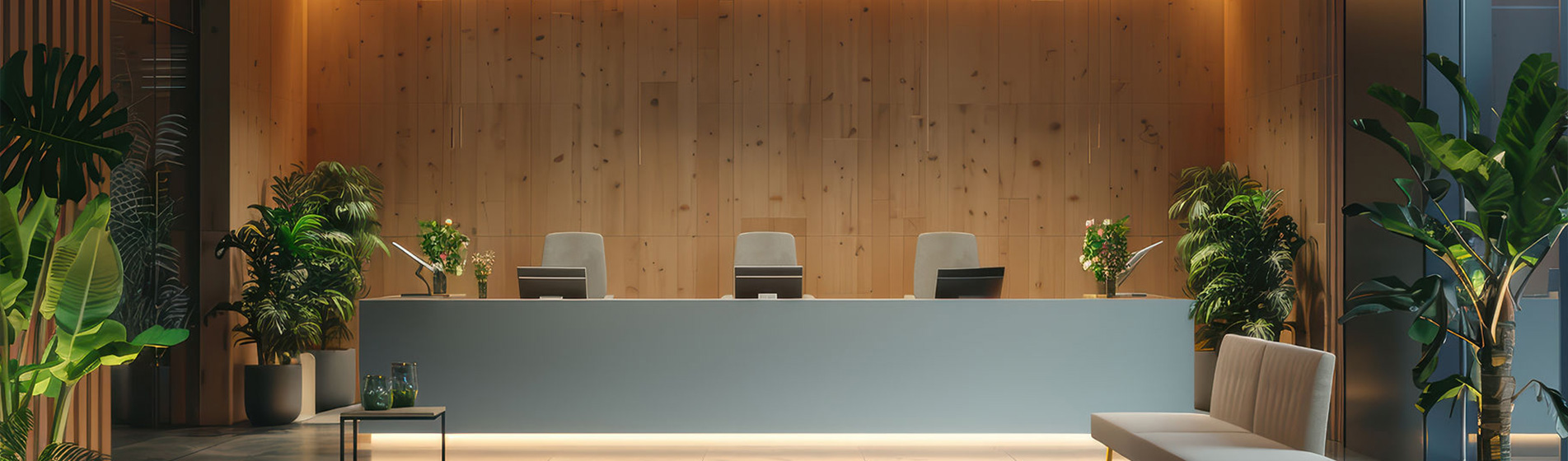
Curved surfaces and organic architectural shapes are becoming increasingly popular in modern interior design. From flowing reception counters and sculptural wall features to custom bathroom elements, designers are looking for materials that offer more flexibility than traditional flat stone slabs. Solid surface thermoforming makes these designs possible by allowing suitable solid surface sheets to be heated, shaped, and formed into three-dimensional structures.
But how does solid surface thermoforming actually work? What happens during the heating and molding process, and what should manufacturers consider when producing curved solid surface products? Understanding the fabrication process helps architects, interior designers, contractors, and project buyers make better decisions when selecting materials for custom interior applications.
At Foshan Kangyi Building Materials Co., Ltd., custom acrylic solid surface fabrication is applied to products such as curved reception desks and three-dimensional decorative wall elements. These applications demonstrate how material selection, thermoforming, precision machining, and finishing work together to turn design concepts into functional architectural products.
Solid surface thermoforming is a manufacturing process that uses controlled heat to make a suitable solid surface sheet flexible enough to be shaped into a specific curve or three-dimensional form. Once the material reaches its workable condition, it is positioned over or inside a forming mold and shaped according to the required design. After cooling, the material retains the intended geometry.
Unlike conventional fabrication, which mainly involves cutting, joining, and polishing flat sheets, thermoforming allows manufacturers to create rounded edges, curved panels, cylindrical structures, and other non-linear designs. This gives architects and designers greater freedom when developing customized furniture and interior features.
However, not every engineered stone material can be thermoformed. Natural marble, conventional quartz slabs, and porcelain surfaces are generally rigid materials that cannot undergo the same bending process as thermoformable acrylic solid surface. Material formulation is therefore one of the most important factors in determining whether a particular design can be manufactured successfully.
For projects requiring distinctive shapes and continuous curved surfaces, explore custom solid surface products to understand the range of architectural fabrication possibilities.
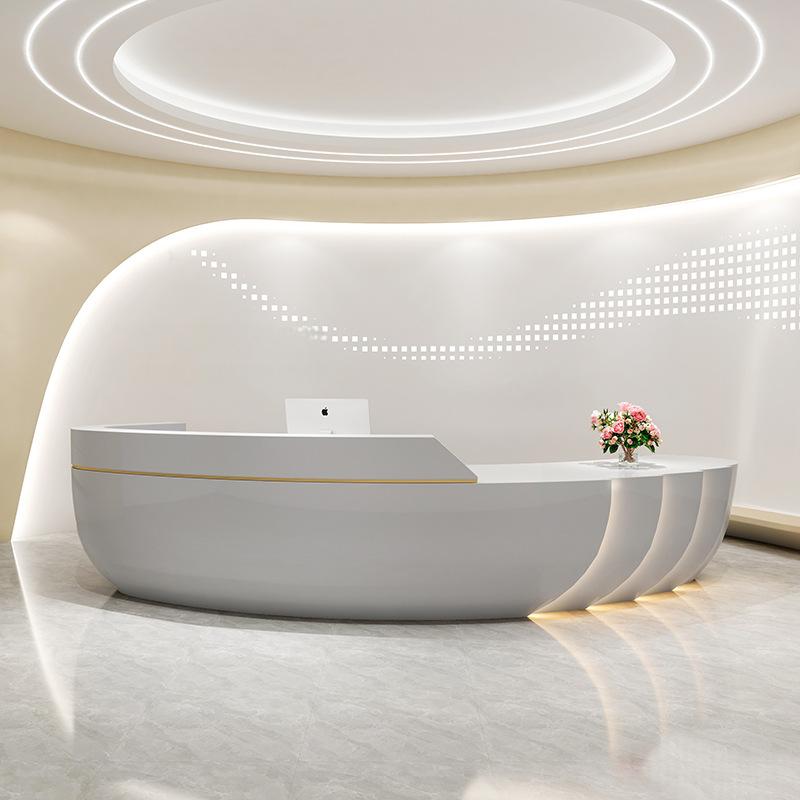
Custom curved solid surface reception desk featuring smooth contours and a seamless appearance.
Although the exact production method depends on the material formulation, sheet thickness, product geometry, and tooling requirements, solid surface thermoforming generally involves several coordinated manufacturing stages.
The first step is selecting a solid surface material that is suitable for the intended forming process. Acrylic solid surface is commonly used for thermoformed applications because its polymer-based composition provides the flexibility required for controlled heat shaping.
Before production begins, the manufacturer evaluates the product dimensions, bending requirements, curve geometry, surface finish, and intended application. CAD drawings or 3D models help clarify the overall structure and identify areas that may require specialized molds or additional support.
For example, a curved reception desk requires more than simply bending a flat panel. Its front profile, countertop dimensions, internal structure, cable openings, and connection points must all work together.
After the material and design have been confirmed, the selected solid surface sheet is heated under controlled conditions. The purpose of heating is to soften the material sufficiently for forming without compromising its surface appearance or structural characteristics.
Temperature control is essential. Insufficient heating may cause uneven bending or excessive forming resistance, while excessive heat can affect color consistency, surface quality, or material performance.
Heating requirements are not universal. They depend on the specific acrylic formulation, sheet thickness, heating equipment, and forming geometry. Manufacturers should therefore establish suitable processing conditions through material specifications and production trials rather than applying one temperature to every solid surface product.
Once the sheet reaches its appropriate forming condition, it is transferred to a prepared mold. Depending on the product design, manufacturers may use specialized forming tools, vacuum-assisted equipment, or other controlled shaping methods.
The material is then formed into the required geometry. Common design possibilities include:
The mold determines the overall shape, while careful control of the forming process helps maintain consistent dimensions and a smooth surface. For more complex designs, the manufacturer may need customized CNC-machined molds to achieve the required geometry.
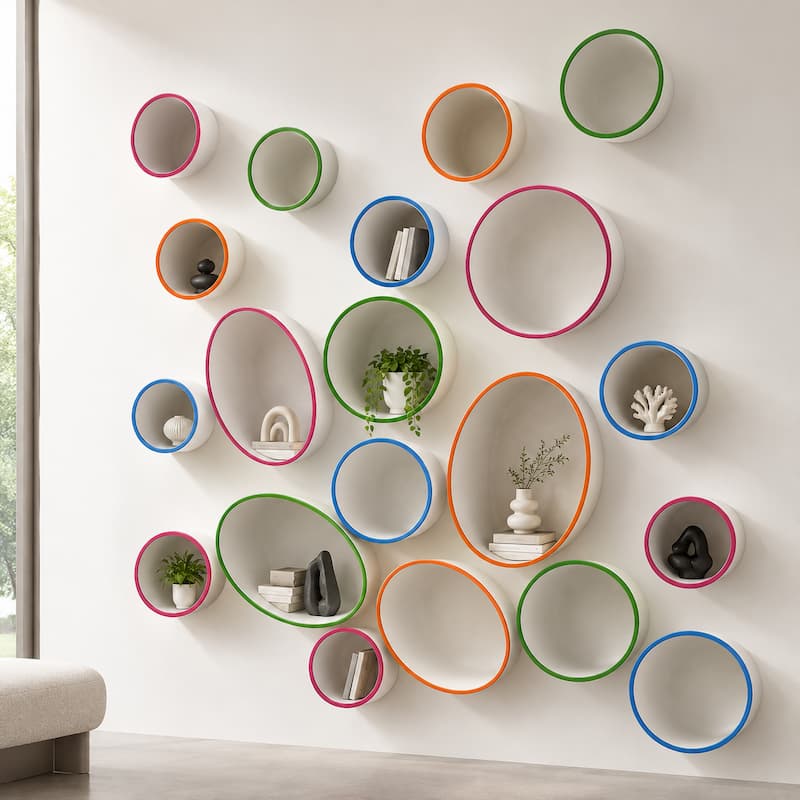
Three-dimensional circular and oval solid surface modules illustrating custom architectural shaping.
After forming, the material must cool under controlled conditions so that it can stabilize in its new shape. Proper cooling helps reduce unwanted deformation and maintain the intended dimensions.
For products with more complicated curves or larger dimensions, manufacturers also need to consider how the formed components will be supported during cooling. Uneven cooling or insufficient support may affect the final geometry and create difficulties during assembly.
This stage is particularly important for commercial furniture and architectural components, where several individual sections may need to fit together accurately.
Thermoforming creates the basic shape, but it is not necessarily the final manufacturing step. Depending on the design, the formed components may require CNC cutting, edge shaping, drilling, trimming, and precision assembly.
When multiple solid surface components are joined together, color-matched adhesive can help create visually continuous connections. The joints are then carefully sanded and polished to achieve a smooth, consistent appearance.
This combination of thermoforming and precision finishing is especially important for custom reception counters, where visible joints can interrupt the overall design.
For projects requiring tailored dimensions, shapes, and finishes, Kangyi also provides custom solid surface reception desks designed for different commercial interior environments.
One of the main advantages of thermoformable acrylic solid surface is its ability to support different architectural shapes. Rather than being limited to flat countertops and rectangular panels, manufacturers can create products that follow the design language of a modern interior.
Reception desks are among the most recognizable applications of curved solid surface fabrication. A rounded front panel or flowing counter profile can create a more welcoming appearance while helping the reception area integrate naturally with the surrounding interior.
Kangyi's Custom Curved Solid Surface Reception Desk for Commercial Interiors is made from acrylic solid surface and supports customized L-shaped, U-shaped, curved, round, arc-shaped, and wave-shaped configurations. Its dimensions can be developed according to CAD or 3D drawings, with color options including white, black, and customized Pantone or RAL colors.
The product is intended for commercial environments such as luxury hotel lobbies, corporate headquarters, flagship retail stores, and VIP lounges.
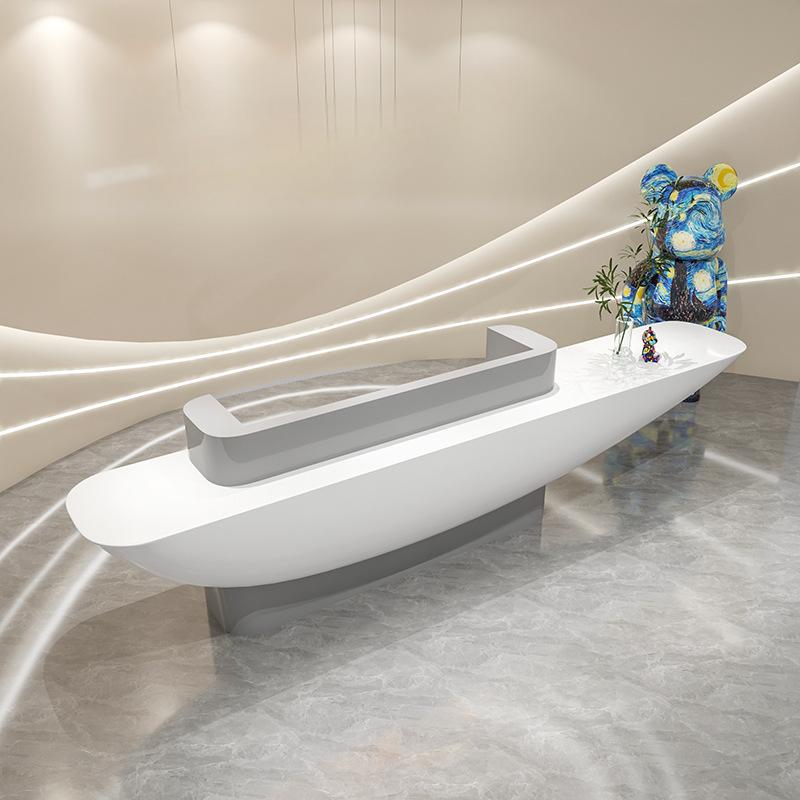
A custom curved reception counter demonstrating the design flexibility of acrylic solid surface.
View the Custom Curved Solid Surface Reception Desk for product specifications, customization options, and commercial applications.
Thermoforming is also useful for creating decorative architectural elements with depth and dimensional variation. Circular wall modules, oval display niches, and sculptural wall features can introduce visual interest without relying entirely on conventional flat panels.
Kangyi's Custom 3D Circular Solid Surface Wall Art is an example of this application. The product uses acrylic solid surface to create cylindrical, oval, and customized irregular forms. Individual modules can be arranged in different sizes, depths, and configurations to create decorative wall installations.
These designs are suitable for boutique retail spaces, hospitality lounges, showrooms, and office interiors. Their appearance can also be coordinated with other solid surface elements within the same project.
Discover the Custom 3D Circular Solid Surface Wall Art to explore its available shapes, customization possibilities, and design applications.
Beyond reception desks and decorative wall installations, custom solid surface fabrication can also be incorporated into furniture, vanity structures, countertops, and other architectural components.
Depending on the material specification and product design, curved sections can be combined with flat panels, integrated functional elements, and customized supporting structures. This makes it possible to develop coordinated interior products that share similar shapes, colors, and surface finishes.
For projects involving multiple applications, buyers can explore Kangyi's custom solid surface product range to identify suitable fabrication solutions.
Not all solid surface sheets behave in the same way during heating and forming. The material composition directly affects flexibility, forming stability, surface appearance, and the final product's performance.
Acrylic solid surface is widely used for custom thermoformed applications because its polymer matrix can soften under controlled heat and be shaped into different geometries. Mineral fillers and other formulation components also influence the material's overall characteristics.
When selecting material for a curved project, manufacturers and buyers should consider several factors:
It is also important to distinguish acrylic solid surface from engineered quartz. Although both materials are used in countertops and interior applications, they have different compositions and fabrication characteristics. Conventional engineered quartz is generally processed through cutting, polishing, and joining rather than the same heat-bending process used for thermoformable acrylic solid surface.
Producing a curved solid surface product involves more than achieving the correct shape. The final quality depends on how well the material, tooling, forming process, and finishing operations are coordinated.
Dimensional accuracy: The formed component should match the approved design drawings. This is particularly important for large reception counters and modular architectural installations.
Consistent surface appearance: Curved areas should maintain a uniform appearance without visible overheating marks, unwanted whitening, or surface irregularities.
Joint quality: Where separate components are assembled, the adhesive color, joint preparation, and polishing process should be carefully controlled to achieve a visually continuous finish.
Structural support: Large furniture products may require an appropriate internal support structure. The supporting framework should be considered during the initial design stage rather than added as an afterthought.
Practical maintenance: The finished surface should be suitable for the environment in which it will be used. Non-porous acrylic solid surface products are valued for their smooth surfaces and straightforward routine cleaning. Minor surface marks may also be addressed through appropriate refinishing procedures, depending on the product specification.
When comparing materials for curved interior projects, it is important to understand that different surface materials offer different fabrication possibilities.
Traditional natural stone and engineered quartz are suitable for many flat countertops and architectural applications. However, their rigid structure limits their ability to undergo deep curved forming. Complex designs may require multiple cut sections and additional joints.
Thermoformable acrylic solid surface offers another approach. Suitable sheets can be heated and molded into curved profiles, while precision bonding and finishing can help reduce the visual impact of connections between components.
| Comparison Factor | Acrylic Solid Surface | Traditional Quartz / Natural Stone |
|---|---|---|
| Curved Forming | Suitable grades can be thermoformed | Generally requires cutting and segmented assembly |
| Custom Shapes | Supports complex curved and organic designs | More limited by material rigidity |
| Seamless Appearance | Color-matched joining and polishing can minimize visible joints | Segmented fabrication may leave more visible connections |
| Typical Fabrication | Heating, molding, CNC machining, joining, and polishing | Cutting, edge processing, polishing, and assembly |
| Common Applications | Curved counters, custom furniture, and decorative forms | Countertops, flooring, wall cladding, and rigid surfaces |
The right material ultimately depends on the design, application, performance requirements, and fabrication budget. For projects where curved geometry and seamless visual continuity are important, thermoformable acrylic solid surface is worth considering.
For architects, interior designers, contractors, and wholesale buyers, selecting a suitable manufacturer is just as important as selecting the material. A supplier should be able to understand the design requirements and translate them into a practical fabrication plan.
Before placing an order, consider the following points:
These questions help buyers evaluate not only the appearance of a finished product but also the manufacturer's ability to manage the entire fabrication process.
Foshan Kangyi Building Materials Co., Ltd. provides custom solid surface fabrication for commercial and architectural projects. Its product range includes curved reception desks and three-dimensional acrylic solid surface wall elements, with customization based on project drawings and design requirements.
Solid surface thermoforming provides an effective fabrication method for creating curved and custom-shaped interior products. By combining suitable acrylic materials, controlled heating, precision molds, CNC machining, and careful finishing, manufacturers can produce forms that go beyond the limitations of conventional flat surfaces.
From curved reception counters to three-dimensional decorative wall installations, the process gives designers greater flexibility in developing distinctive commercial interiors. However, successful results depend on appropriate material selection, accurate design preparation, and consistent manufacturing control.
For architects, contractors, and project buyers looking for customized solid surface solutions, working with an experienced fabrication manufacturer can help turn complex design concepts into practical products.
If you are planning a curved reception desk, a custom architectural feature, or another solid surface project, Foshan Kangyi Building Materials Co., Ltd. can help you explore suitable material and fabrication options based on your project drawings and requirements.
Solid surface thermoforming is a fabrication process in which a suitable solid surface sheet is heated until it becomes flexible, shaped using a mold, and cooled to retain a customized curved or three-dimensional form.
Thermoformable acrylic solid surface materials are commonly used because their polymer composition allows controlled heating and shaping. Not all solid surface formulations have the same forming capabilities, so material specifications should be checked before production.
Yes, suitable acrylic solid surface sheets can be formed into curved profiles. The achievable bending radius depends on material formulation, sheet thickness, tooling, and forming conditions. The manufacturer should confirm feasibility for the specific design.
Color-matched acrylic adhesives, precision joining, sanding, and polishing can create visually seamless connections between solid surface components. The final result depends on fabrication accuracy and the product design.
Common applications include curved reception desks, rounded counters, cylindrical decorative elements, three-dimensional wall features, and customized furniture components. Kangyi showcases curved reception desks and circular solid surface wall art as examples of these applications.
Yes. Thermoformed acrylic solid surface can be used for commercial interior products such as hotel reception counters, corporate lobby furniture, retail display features, and decorative wall installations. Material specifications and structural requirements should be evaluated according to the project.
Yes. CAD drawings and 3D models can be used to define dimensions, curvature, product geometry, and fabrication requirements. Kangyi offers custom fabrication and CAD/3D drawing support for its curved reception desk and three-dimensional wall art products.
Routine maintenance generally involves wiping the surface with water or a suitable neutral cleaner. Minor scratches and surface marks may be addressed through appropriate sanding or polishing, depending on the material and manufacturer's maintenance instructions.
Looking for Custom Solid Surface Fabrication?
Share your CAD drawings, product dimensions, or design ideas with Kangyi. Our team can help you explore suitable solid surface materials and customized fabrication options for your project.
Scan to Wechat :

Scan to WhatsApp :

Home
products
contact